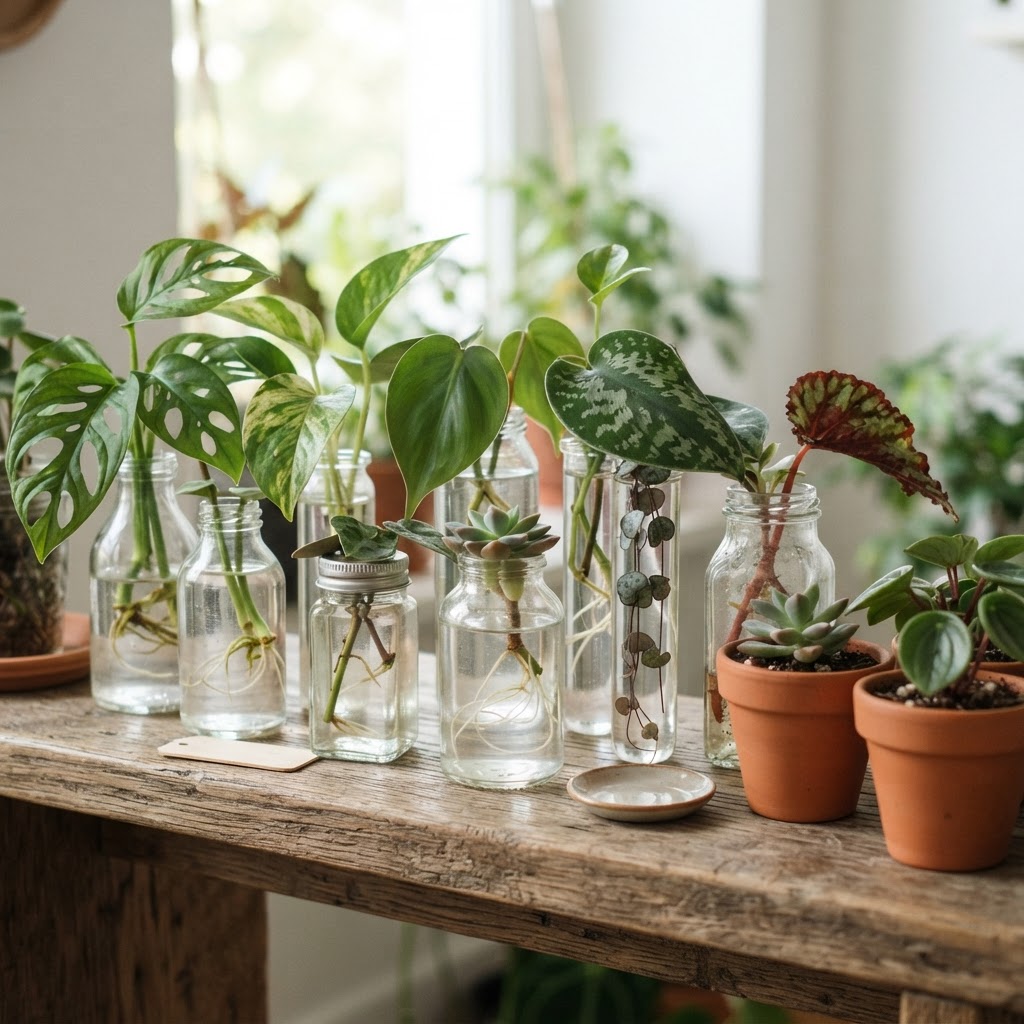
Everything you need to know to start multiplying your plant collection — from understanding the science of rooting to choosing the right method for each plant.
What Is Plant Propagation?
Plant propagation is the process of creating new plants from existing ones. It's how growers multiply their collection, preserve beloved varieties, and share plants with friends. Whether you're a home hobbyist or a serious collector, propagation is one of the most rewarding skills in plant care.
There are two main categories of propagation:
- Sexual propagation — growing from seed, which combines genetics from two parent plants
- Asexual (vegetative) propagation — creating clones from stems, leaves, or roots, producing genetically identical plants
This guide focuses on vegetative propagation, the most practical method for home growers.
Why Propagate Your Own Plants?
Propagation offers several compelling benefits:
- Cost savings — Instead of buying new plants, create them from ones you already own
- Genetic preservation — Clones maintain the exact traits of the parent plant
- Sharing and trading — Propagate extras to gift or swap with fellow plant lovers
- Rescue and recovery — Save a struggling plant by rooting healthy cuttings before it's too late
- Scientific satisfaction — There's nothing quite like watching a cutting develop roots and become a new plant
The Core Methods at a Glance
Stem Cuttings
The most popular method. A portion of stem is cut and encouraged to grow roots in water or soil. Works beautifully with Roots Down Propagation Gel to accelerate rooting.
Leaf Cuttings
Best for succulents and a few other species. A single leaf is placed on soil and develops roots and a new plantlet.
Division
The simplest method — splitting a mature plant's root ball into multiple sections. Ideal for cluster-growing plants like snake plants and ZZ plants.
Air Layering
An advanced technique where roots are encouraged to grow on a stem while it's still attached to the parent plant. After rooting, the stem is cut and planted.
Essential Tools and Supplies
Before you begin, gather these essentials:
- Clean, sharp scissors or pruning shears — Sterilize with rubbing alcohol to prevent infection
- Propagation vessels — Glass jars for water propagation, small pots for soil
- Rooting medium — High-quality propagation gel like Roots Down Propagation Gel dramatically improves success rates
- Well-draining potting mix — A blend of perlite, coco coir, and potting soil
- Spray bottle — For misting cuttings and maintaining humidity. Once roots emerge, apply Roots Down Root Booster to the root zone to support continued root development
- Warmth and indirect light — A bright windowsill or grow light setup
Understanding Rooting Hormones
Rooting hormones contain auxins — natural plant compounds that stimulate root development. While some plants root easily without assistance, many benefit significantly from application.
Our Roots Down Propagation Gel contains a balanced blend of natural auxins and nutrients that:
- Speed up root initiation
- Increase the percentage of cuttings that successfully root
- Produce stronger, more developed root systems
- Are safe, non-toxic, and plant-based
Getting Started: Your First Propagation
For your first attempt, we recommend starting with an easy plant like pothos or philodendron using the stem cutting method:
- Select a healthy stem with at least 2-3 nodes (the bumps where leaves attach)
- Cut just below a node at a 45-degree angle
- Remove the lower leaves, keeping 1-2 at the top
- Dip the cut end in Roots Down Propagation Gel
- Place in water or moist soil
- Keep in bright, indirect light and maintain humidity with Roots Down Root Booster
- Wait 2-4 weeks for roots to develop
For detailed, plant-specific instructions, explore our other guides in The Propagation Lab.
Key Principles for Success
Regardless of the method you choose, these principles apply:
- Cleanliness is critical — Sterilize tools between cuts to prevent bacterial and fungal infections
- Choose healthy parent plants — Cuttings from stressed or diseased plants rarely succeed
- Patience pays off — Rooting takes time; don't disturb cuttings unnecessarily
- Warmth encourages rooting — Aim for 70-80°F (21-27°C) for optimal results
- Humidity matters — Cover cuttings with a clear plastic bag or dome to maintain moisture
Ready to Begin?
Start with the right tools. Our Roots Down Propagation Gel and Roots Down Root Booster are formulated to give your cuttings the best possible start.
Explore our complete guide collection for step-by-step instructions on specific methods and plant varieties.