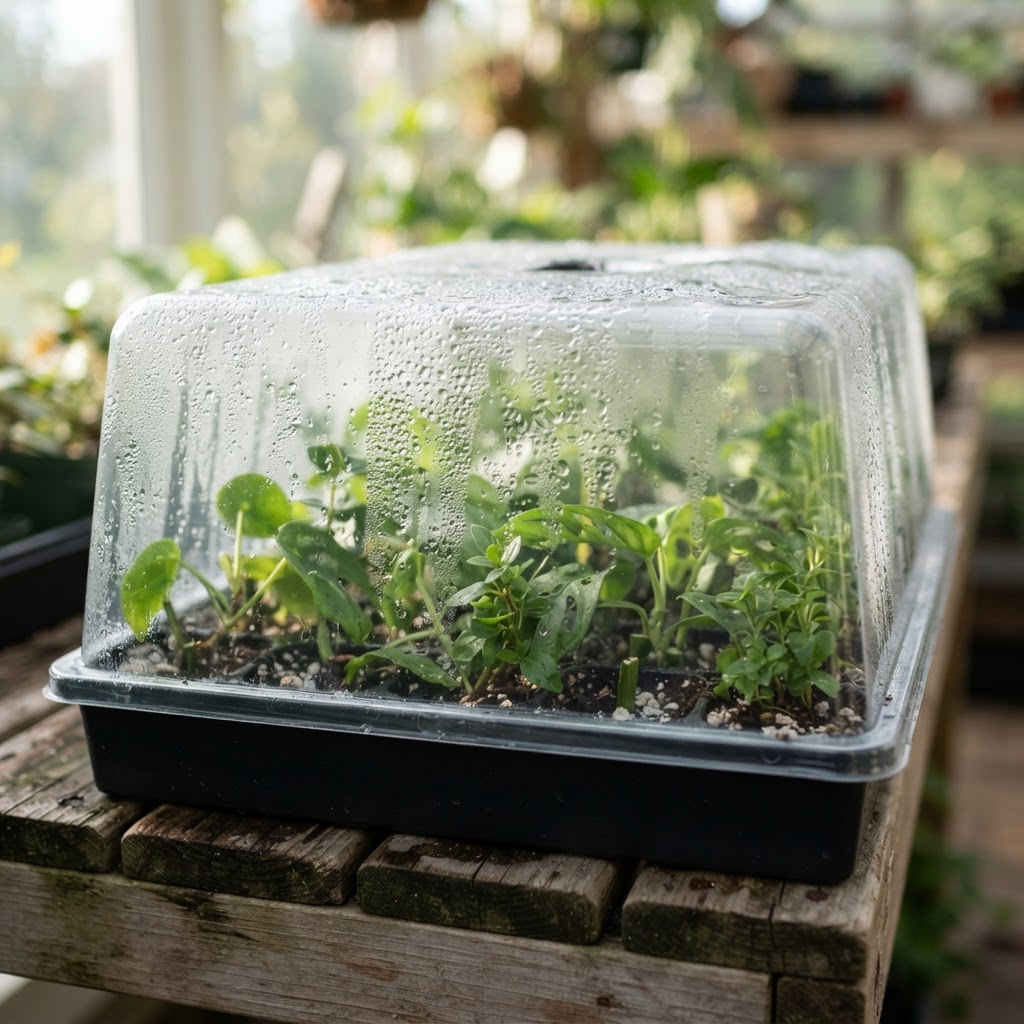
Creating the perfect microclimate for your cuttings can double your success rate. Here's how to master the humidity dome.
Why Humidity Matters
Fresh cuttings have no roots to absorb water, yet they continue to lose moisture through their leaves. Without high humidity, they wilt and die before roots can form. A humidity dome creates the microclimate they need to survive the rooting phase.
Setting Up Your Dome
- Choose the right size — the dome should clear your cuttings by 2-3 inches
- Add ventilation — poke a few small holes or open vents daily to prevent mold
- Maintain moisture — mist the inside of the dome and the cuttings with plain water 2-3 times daily
- Monitor temperature — aim for 72-78°F for optimal rooting
The Cloning Environment
Beyond humidity, successful cloning requires:
- Bottom heat — a propagation heat mat speeds root initiation
- Indirect light — bright but not direct sun
- Clean tools — sterilize blades with alcohol between cuts
When to Remove the Dome
After 7-14 days, check for root development. Once roots are visible through the medium or the cutting resists a gentle tug, begin hardening off — remove the dome for a few hours each day, gradually increasing over a week.
Common Mistakes
- Too wet — the medium should be moist, not soggy
- No ventilation — stagnant air breeds mold and rot
- Too hot — temps above 85°F cook cuttings
- Direct sun — magnified through the dome, it scorches leaves