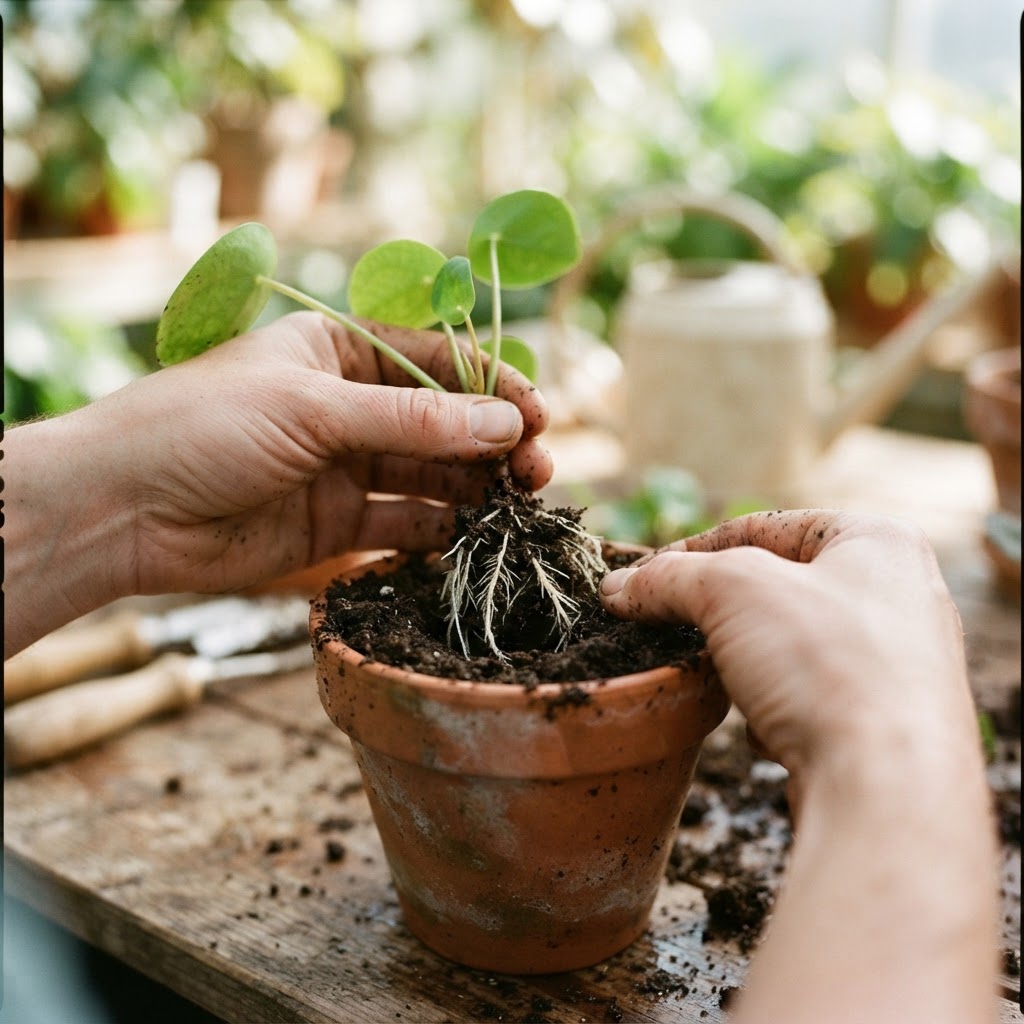
Your cuttings have rooted — now what? Learn the gentle art of transplanting without shocking your new plants.
Knowing When to Transplant
Your cutting is ready to transplant when:
- Roots are 1-2 inches long (in water propagation)
- The cutting resists a gentle tug (in soil propagation)
- New leaf growth appears at the top
- Roots are visible through drainage holes or the medium surface
Preparing for Transplant
Harden Off First
Before transplanting, gradually expose cuttings to lower humidity and brighter light over 5-7 days. This reduces shock dramatically.
Choose the Right Pot
Start with a small pot (4-6 inches). Going too large too fast leads to overwatering and root rot. Ensure good drainage.
The Transplant Process
- Water the cutting an hour before transplanting — moist root balls handle stress better
- Prepare the new pot with fresh, pre-moistened soil
- Gently remove the cutting — squeeze the cup or dig around the root ball
- Place at the same depth — don't bury the stem deeper than it was
- Fill and firm gently — eliminate air pockets without compacting
- Water in thoroughly — settle the soil around the roots
Aftercare
The First Week
- Keep the plant in bright, indirect light
- Maintain slightly higher humidity if possible
- Don't fertilize yet — let roots establish first
Weeks 2-4
- Gradually move to the plant's preferred light conditions
- Begin light feeding with a diluted fertilizer
- Watch for signs of stress: wilting, yellowing, or stunted growth
Common Problems
| Symptom | Likely Cause | Fix | |---------|-------------|-----| | Wilting | Transplant shock | Increase humidity, reduce light | | Yellow leaves | Overwatering | Let soil dry between waterings | | No new growth | Root damage | Be patient, reduce stress |
Pro tip: Applying Roots Down Root Booster to the root zone after transplanting can reduce shock and support recovery through the critical first week.