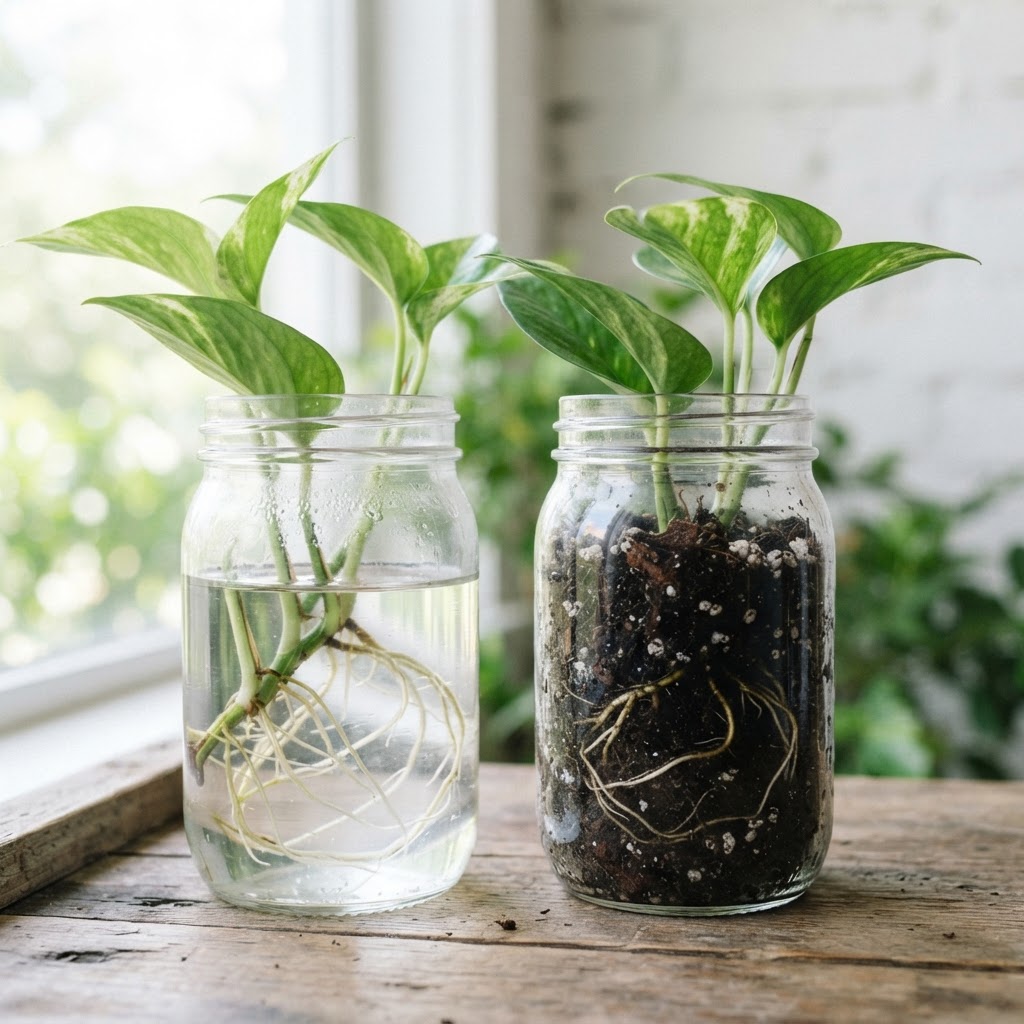
Which method is better? We break down the pros and cons of each so you can choose the right approach for your plants.
The Great Debate
Both water and soil propagation can produce excellent results — the right choice depends on your plant species, your environment, and your goals.
Water Propagation
Pros:
- You can watch roots develop in real time
- No special medium needed
- Great for soft-stemmed plants like pothos and philodendron
Cons:
- Water roots are structurally different from soil roots
- Transplant shock can occur when moving to soil
- Plants can stall if left in water too long
Soil Propagation
Pros:
- Roots develop in their final medium — no transplant shock
- Stronger, more adaptable root systems
- Better for woody and semi-hardwood cuttings
Cons:
- You can't see root development
- Risk of overwatering and rot
- Requires careful moisture management
Our Recommendation
For beginners, we recommend starting in water for soft-stemmed plants — it's satisfying and forgiving. For woody plants and serious cloning, use propagation gel in soil for the strongest start.
Best of Both Worlds
Use our Propagation Gel even in water propagation. A light coating on the stem before placing it in water gives the cutting an extra boost of natural rooting compounds.