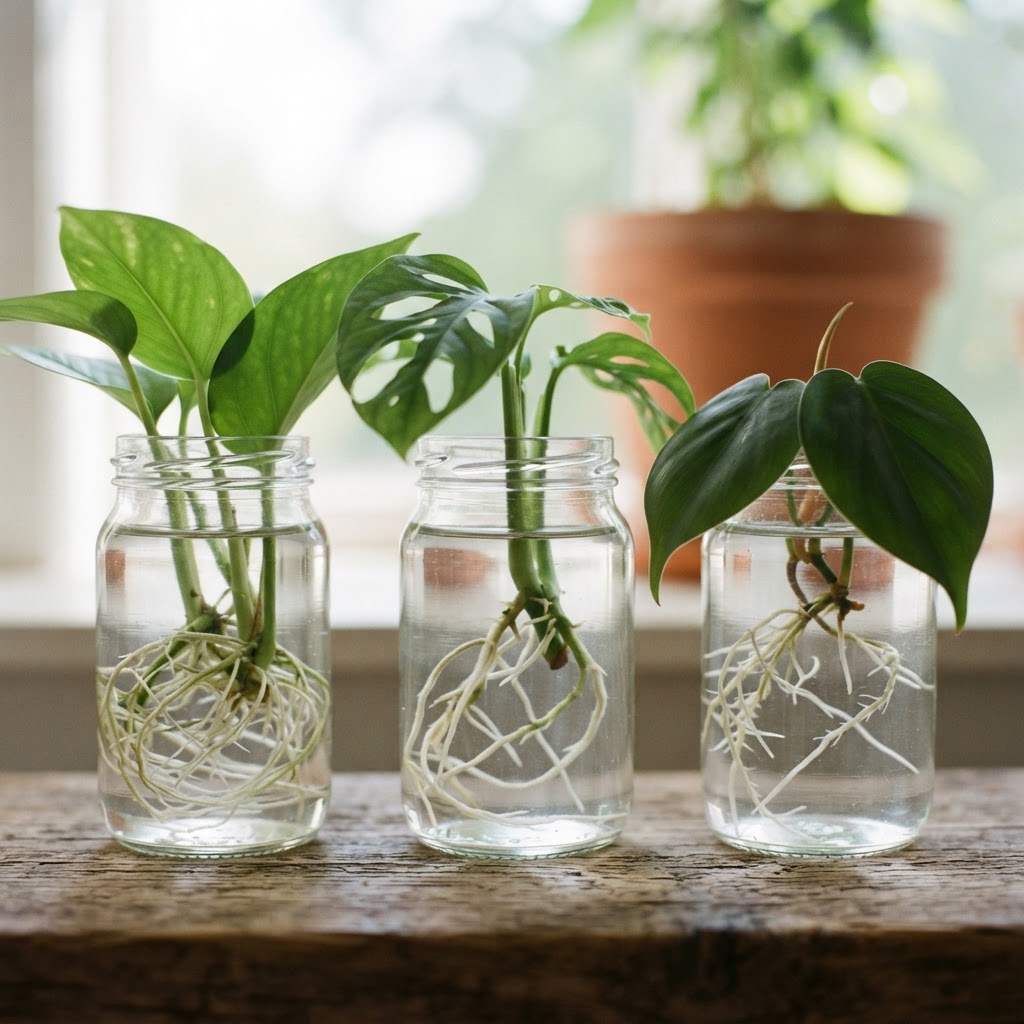
The simplest and most rewarding propagation method. Learn how to root cuttings in water with step-by-step instructions and pro tips.
Why Water Propagation?
Water propagation is the most accessible and visually rewarding method for rooting cuttings. You can watch roots develop in real-time, and it requires minimal supplies. It's especially popular for aroids like pothos, philodendron, and monstera.
What You'll Need
- Clean glass jars or vases
- Room-temperature water (filtered or left out overnight to dechlorinate)
- Sharp, sterilized scissors or pruning shears
- Roots Down Propagation Gel
- Roots Down Root Booster
- A bright spot with indirect light
Step-by-Step: Rooting Cuttings in Water
Step 1: Select and Prepare Your Cutting
Choose a healthy stem from a vigorous parent plant. Look for:
- A stem with 3-4 nodes minimum
- At least 2-3 healthy leaves
- No signs of disease, pests, or damage
Cut just below a node at a 45-degree angle. The node is where roots will emerge, so this cut placement is critical.
Step 2: Apply Rooting Gel
Remove the lower leaves, leaving only the top 1-2 leaves. Dip the freshly cut end into Roots Down Propagation Gel, coating the bottom inch of the stem. The gel's natural auxins will stimulate rapid root development at the node.
Step 3: Place in Water
Fill a clean glass jar with room-temperature water. Submerge the bottom 1-2 nodes. Make sure no leaves are touching the water — they'll rot.
Place the jar in a bright spot with indirect light. Direct sun will heat the water and promote algae growth.
Step 4: Maintain and Monitor
- Change the water every 3-5 days to prevent bacterial growth and provide fresh oxygen
- **Mist the leaves with plain water every 2-3 days to maintain humidity
- Keep the temperature warm — 70-80°F (21-27°C) is ideal
Step 5: Wait for Roots
Most cuttings will develop visible roots within 2-4 weeks. You'll see small white nubs emerge from the nodes first, followed by longer feeder roots.
Wait until roots are at least 1-2 inches long before transplanting to soil. Rushing this step often leads to transplant shock.
Transitioning to Soil
Water roots are adapted to an aquatic environment. When moving to soil:
- Pot in loose, well-draining soil — A mix of coco coir, perlite, and potting soil works well
- Keep the soil consistently moist for the first 1-2 weeks as roots adapt
- Continue misting with plain water to reduce stress
- Gradually reduce watering as the plant establishes soil roots
Best Plants for Water Propagation
- Pothos — Roots in 1-2 weeks, very forgiving
- Philodendron — Fast rooter, similar to pothos
- Monstera Deliciosa — Roots in 2-4 weeks, needs larger cuttings
- Tradescantia — Extremely fast, roots in days
- Begonias — Some varieties root well in water
Common Mistakes to Avoid
- Leaving leaves in the water — They rot and contaminate the water
- Using cold water — Shocks the cutting and slows rooting
- Placing in direct sun — Overheats the water and promotes algae
- Not changing the water — Bacteria buildup kills delicate new roots
- Transplanting too early — Wait for substantial root growth before potting
Pro Tips for Better Results
- Add a small piece of activated charcoal to the water to keep it fresh longer
- Use warm water (not hot) to encourage faster rooting
- For woody stems, try Mother's Mist for additional nutrient support during rooting
- Multiple cuttings in one jar look beautiful and create a humidity microclimate
Ready to Try?
Grab your Roots Down Propagation Gel and Roots Down Root Booster, and start multiplying your collection today. For plant-specific instructions, see our guides on propagating pothos, monstera, and philodendron.