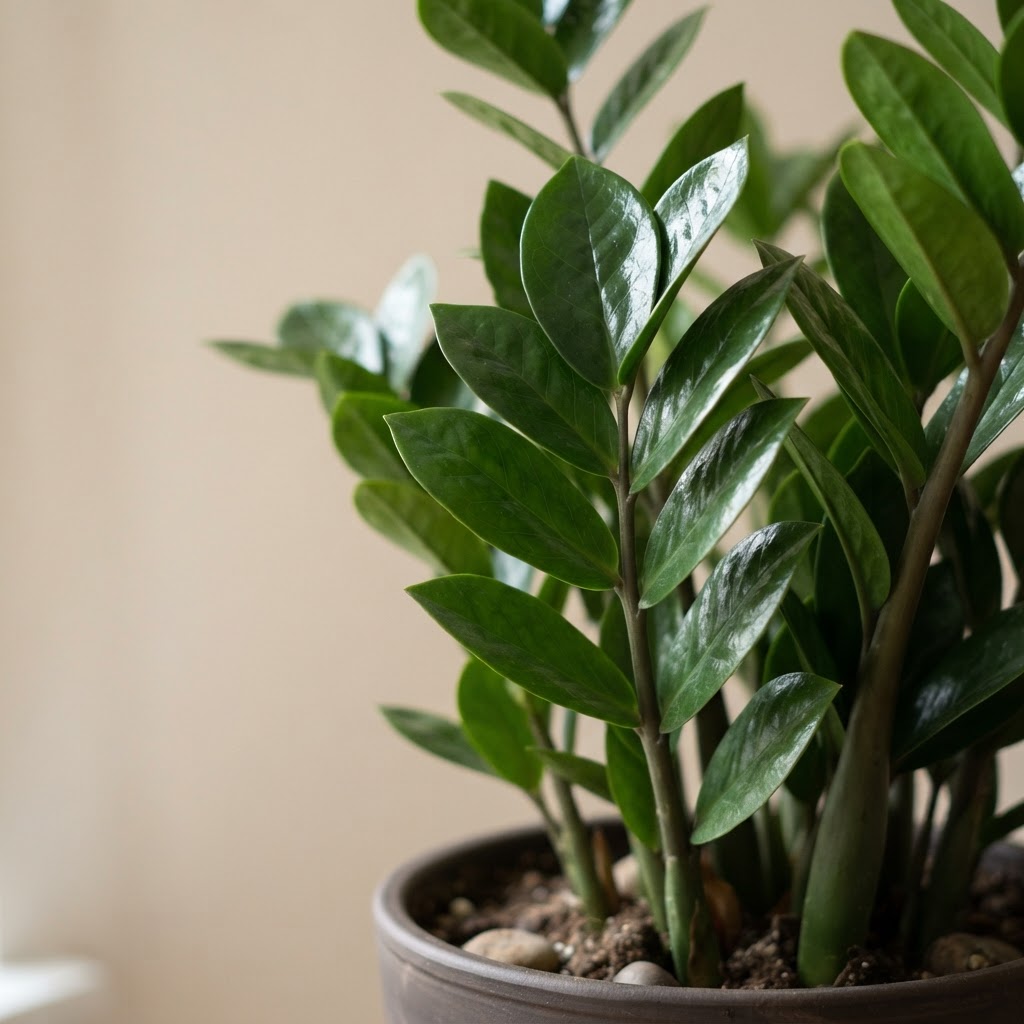
ZZ plants are slow to root but incredibly rewarding. Learn three propagation methods and why patience is the key to success.
Why ZZ Plants Are Worth Propagating
ZZ plants (Zamioculcas zamiifolia) are nearly indestructible houseplants that thrive in low light and tolerate neglect. Propagating them allows you to multiply these glossy, architectural plants — but they require patience, as they root slowly.
Propagation Methods for ZZ Plants
There are three main methods:
- Stem cuttings in water — The most popular method
- Stem cuttings in soil — Produces stronger roots but is slower
- Leaflet cuttings — Slow but can produce many new plants from a single stem
- Division — The fastest method, done at repotting time
Method 1: Stem Cuttings in Water
What You'll Need
- A healthy ZZ plant
- Clean, sharp scissors or shears
- Roots Down Propagation Gel
- A glass jar or vase
- Roots Down Root Booster
- Room-temperature water
Step-by-Step
Step 1: Select a Stem
Choose a healthy, mature stem that's at least 6 inches tall. Look for one with a clean base where it meets the soil.
Step 2: Cut the Stem
Cut the stem at the base, as close to the soil line as possible. The entire stem will be one cutting.
Step 3: Apply Rooting Gel
Dip the cut end into Roots Down Propagation Gel, coating the bottom 1-2 inches. ZZ plants are slow rooters, so the auxin boost is especially helpful.
Step 4: Place in Water
Fill a glass jar with room-temperature water. Submerge the bottom 2-3 inches of the stem. Place in bright, indirect light.
Step 5: Maintain and Wait
- Change water weekly
- Mist with plain water every 3-4 days to maintain humidity
- Temperature: 70-80°F (21-27°C)
- Patience: ZZ plants root slowly — expect 4-8 weeks
Method 2: Leaflet Cuttings
This method allows you to create many plants from a single stem.
- Remove individual leaflets from a mature stem
- Dip the base of each leaflet in Roots Down Propagation Gel
- Insert 1/4 inch into well-draining soil
- Keep soil lightly moist and maintain high humidity
- Wait 2-3 months for a small rhizome to form
This method is slow but produces many plants. Apply Roots Down Root Booster to the root zone once roots emerge to support continued development.
Method 3: Division
The fastest method for ZZ plants.
- Remove the plant from its pot at repotting time
- Gently separate the root ball into sections
- Each section should have at least one stem with attached rhizomes and roots
- Plant in fresh, well-draining soil
- Water lightly and keep in indirect light
Understanding ZZ Plant Rhizomes
ZZ plants grow from thick, potato-like rhizomes under the soil. These rhizomes store water and nutrients, which is why the plant tolerates drought so well.
When propagating, the goal is to encourage the cutting to develop a new rhizome. This is the slow part — the rhizome forms underground before you see any visible growth.
Signs of Successful Rooting
- In water: White roots emerging from the cut end
- In soil: New growth emerging from the soil (this can take months!)
- The cutting stays firm and doesn't wilt
Common Problems
The stem rotted in water
ZZ plants have thick, fleshy stems that can rot if the water isn't changed regularly. Change water weekly and ensure no leaves are submerged.
No visible growth after 2 months
This is normal for ZZ plants. The rhizome is developing underground. Continue regular care and be patient.
Leaflets turned yellow
Too much water or not enough light. Move to brighter indirect light and reduce watering.
Pro Tips
- Propagate in spring or summer when the plant is actively growing
- Use Roots Down Propagation Gel — ZZ plants benefit significantly from rooting hormone
- Be patient — ZZ plants are slow rooters but very rewarding
- Division is fastest — If you need plants quickly, divide instead of taking cuttings
- Mist regularly with plain water to maintain humidity
Ready to Propagate Your ZZ Plant?
Grab your Roots Down Propagation Gel and start multiplying. For more propagation techniques, see our water propagation guide and soil propagation guide.