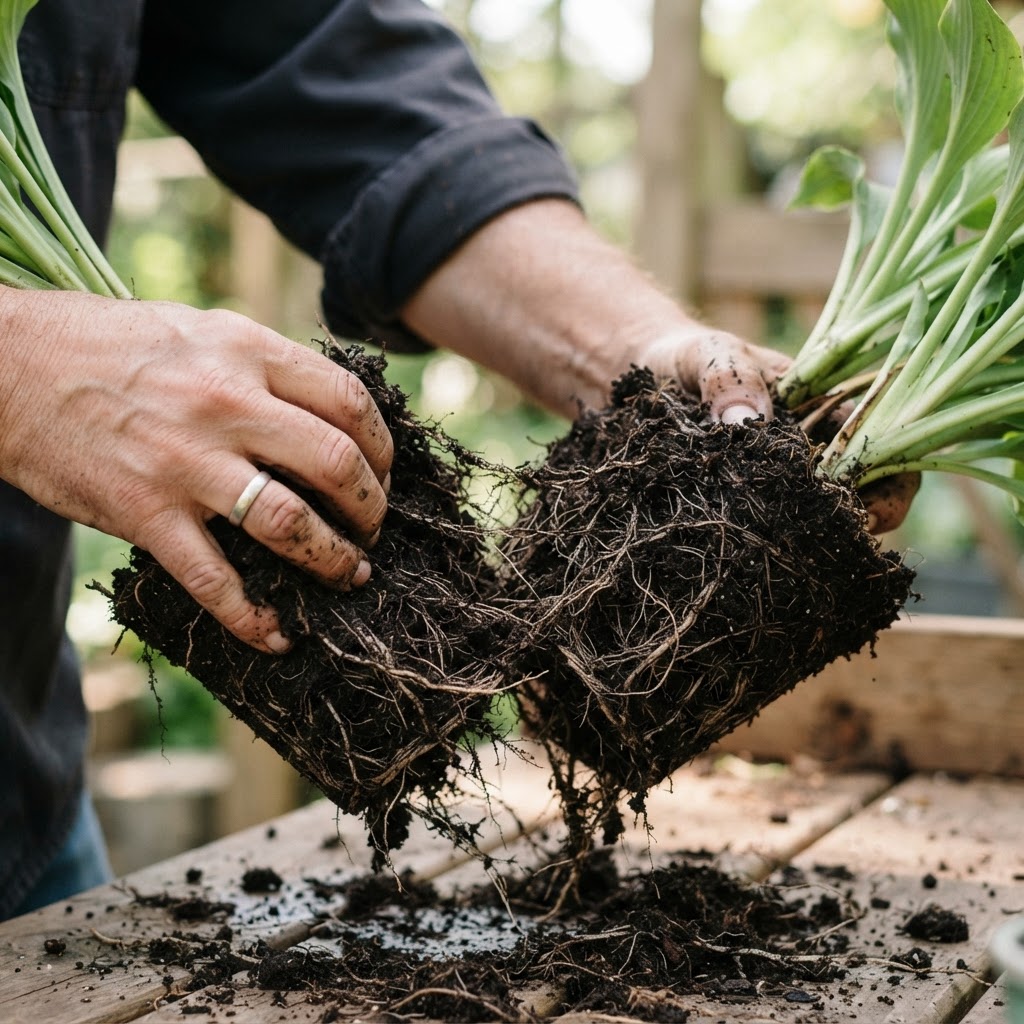
The simplest and fastest propagation method. Learn how to split mature plants into multiple thriving new ones with step-by-step instructions.
What Is Plant Division?
Division is the simplest and most reliable propagation method. Instead of taking cuttings and waiting for roots, you split an existing plant into multiple sections — each with its own established root system.
Division is the fastest way to multiply plants, and it works beautifully for:
- Snake plants
- ZZ plants
- Peace lilies
- Boston ferns
- Calathea
- Monstera (at repotting time)
- Bird of Paradise
- Any clumping or rhizomatous plant
When to Divide
The best time to divide is during repotting, typically in spring or early summer when plants are actively growing.
Signs a plant is ready for division:
- The plant is root-bound
- Roots are growing out of drainage holes
- The plant has outgrown its pot
- Multiple growth points or crowns are visible
- Growth has slowed despite proper care
What You'll Need
- A mature plant to divide
- Clean, sharp knife or pruning shears
- Fresh potting soil
- New pots with drainage holes
- Roots Down Root Booster (for post-division recovery)
- Mother's Mist (for ongoing nutrient support)
- Gloves (for plants with irritating sap)
Step-by-Step: Dividing a Plant
Step 1: Remove the Plant from Its Pot
Water the plant thoroughly the day before — this makes the roots more pliable and reduces stress. Gently slide the plant out of its pot. For stubborn root-bound plants, you may need to tap the pot or run a knife around the edge.
Step 2: Assess the Root Ball
Examine the root ball. Look for natural divisions — areas where the plant forms distinct sections or clumps. These are your separation points.
Step 3: Gently Separate
For loosely rooted plants, you can often tease the sections apart with your fingers. Start at the edges and work inward.
For tightly root-bound plants, use a clean, sharp knife to cut through the root ball. Don't worry about cutting some roots — the plant will recover.
Step 4: Create Divisions
Each division should have:
- At least one healthy growth point (crown or stem)
- A good portion of roots
- Some soil attached
A mature plant can usually be divided into 2-4 sections.
Step 5: Pot Up the Divisions
Fill new pots with fresh potting soil. Plant each division at the same depth it was growing before. Firm the soil gently around the roots.
Step 6: Water and Care
- Water thoroughly after potting to settle the soil
- Place in bright, indirect light — avoid direct sun for 1-2 weeks
- **Mist the foliage with plain water to reduce transplant stress
- Hold off on fertilizer for 4-6 weeks, then use Mother's Mist for ongoing nutrition
Division Tips for Specific Plants
Snake Plants
Snake plants grow from rhizomes that spread underground. Simply cut the rhizome between stems, ensuring each section has roots and at least one leaf.
ZZ Plants
Like snake plants, ZZ plants grow from rhizomes. Gently pull apart the rhizome sections, each with at least one stem.
Peace Lilies
Peace lilies grow in clumps. Gently tease apart the root ball into sections, each with 3-4 leaves and good roots.
Monstera
Monsteras can be divided at repotting time. Look for stems with their own root systems and gently separate them.
Boston Ferns
Ferns can be divided by cutting the root ball into quarters. Each section should have fronds and healthy roots.
Advantages of Division
- Instant plants — Each division is already a complete plant with roots
- No rooting needed — Skip the uncertainty of cutting propagation
- Preserves variegation — Divisions are genetically identical to the parent
- Rejuvenates the parent plant — Dividing root-bound plants revitalizes them
- Best for plants that don't root from cuttings — Some plants simply won't propagate from cuttings
Common Problems
The division wilted after potting
This is normal transplant shock. Keep in indirect light and mist with plain water. It should recover in 1-2 weeks.
Roots are tangled and won't separate
Use a clean, sharp knife to cut through the root ball. It's better to make clean cuts than to tear roots apart.
The division isn't growing
Be patient. The plant is establishing its root system. Use Mother's Mist to provide nutrients during recovery.
Pro Tips
- Divide in spring or early summer for best results
- Water the day before to make roots more pliable
- Use clean tools to prevent infection
- Don't divide too small — Each section needs enough roots to sustain itself
- Apply Roots Down Root Booster to the root zone after dividing to reduce stress and support establishment
- Use Roots Down Propagation Gel on any cut rhizome surfaces to prevent rot and encourage healing
Ready to Divide?
Get your Roots Down Root Booster and Mother's Mist and give your plants room to grow. For cutting-based propagation methods, see our water propagation guide and soil propagation guide.