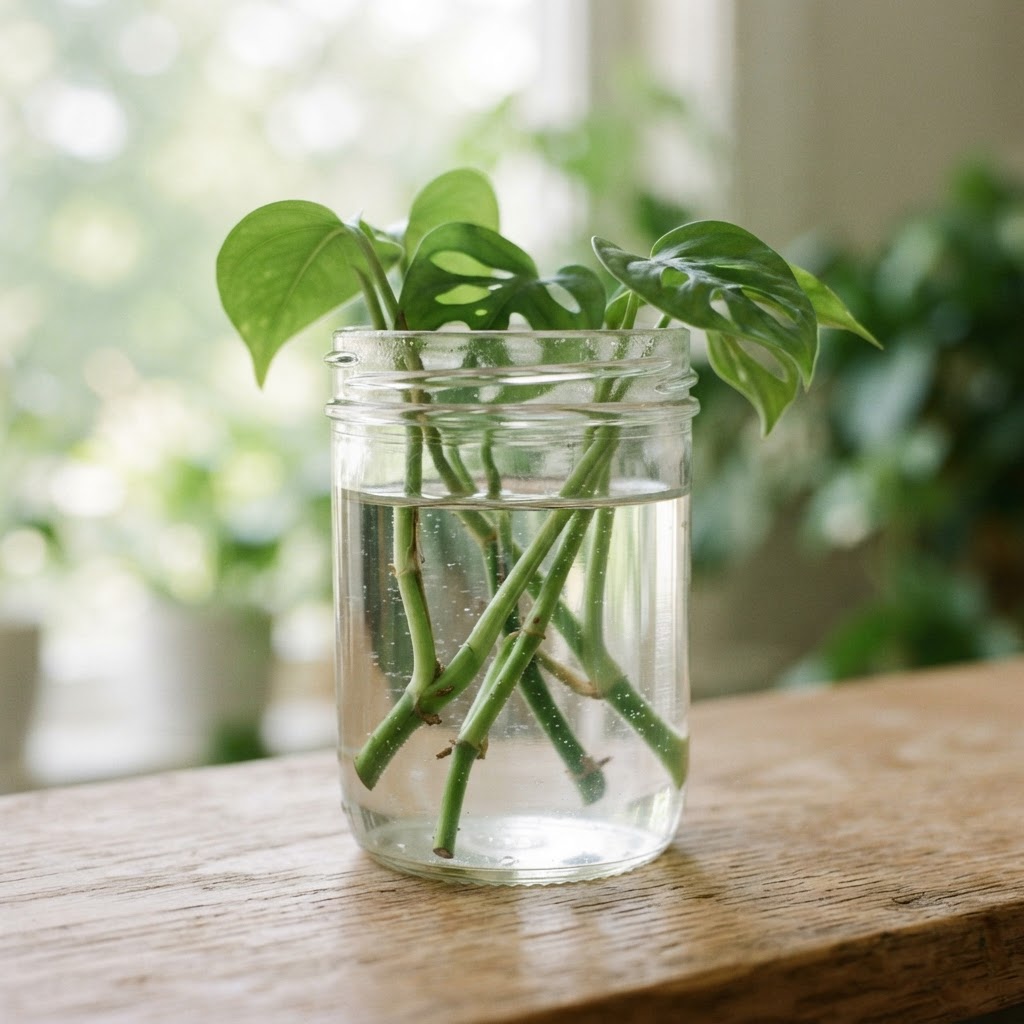
Cuttings not rooting? Diagnose and fix the 7 most common propagation failures with this practical troubleshooting guide.
When Cuttings Won't Root
Few things are more frustrating than taking cuttings that refuse to root. But before you give up, let's diagnose the problem. Most propagation failures come down to a handful of common issues — all of which are fixable.
The 7 Most Common Reasons Cuttings Fail
1. No Node in the Rooting Medium
Symptoms: The cutting sits in water or soil for weeks with no root development.
Cause: Roots only emerge from nodes. If no node is below the water or soil line, the cutting simply cannot root.
Solution: Always ensure at least one node is submerged in water or buried in soil. Identify nodes as the small bumps or rings where leaves attach to the stem.
2. Wrong Temperature
Symptoms: Cuttings are alive but not growing roots after 4+ weeks.
Cause: Most tropical plants need 70-85°F (21-29°C) to root. Cold temperatures dramatically slow or stop root development.
Solution: Move cuttings to a warmer location. Use a heat mat for consistent bottom heat. Avoid drafty windowsills.
3. Insufficient Light
Symptoms: Cuttings are pale, leggy, or slowly declining.
Cause: Cuttings need light for photosynthesis — even before they have roots. But too much direct sun can overheat them.
Solution: Provide bright, indirect light. A north or east-facing window is ideal. Use grow lights if natural light is insufficient.
4. No Rooting Hormone
Symptoms: Cuttings are healthy but root very slowly or not at all.
Cause: Some plants root easily without hormone, but many benefit significantly from the auxin boost.
Solution: Use Roots Down Propagation Gel on every cutting. The natural auxins stimulate root initiation and the gel seals the cut end to prevent infection.
5. Rot from Overwatering
Symptoms: The stem turns black/brown and mushy, starting from the bottom.
Cause: Too much water causes the stem to rot before roots can form. This is the #1 cause of failure for soil propagation.
Solution:
- In water: Change water every 3-5 days and ensure no leaves are submerged
- In soil: Use well-draining soil and water sparingly — only when the top inch is dry
- Remove any rotted portions immediately and start fresh
6. Low Humidity
Symptoms: Leaves are wilting, curling, or drying out before roots form.
Cause: Cuttings without roots can't absorb water efficiently. In low humidity, they lose moisture faster than they can take it up.
Solution: Create a humidity tent with a clear plastic bag or dome. Mist regularly with plain water to maintain moisture around the leaves.
7. Taking Cuttings at the Wrong Time
Symptoms: Cuttings from the same plant root fine in summer but fail in winter.
Cause: Plants root best during their active growing season (spring and summer). Dormant plants are much harder to root.
Solution: Take cuttings in spring or summer when possible. If propagating in winter, provide supplemental warmth and light.
Diagnostic Checklist
If your cutting isn't rooting, work through this checklist:
- ✓ Is there a node in the water/soil?
- ✓ Is the temperature between 70-85°F?
- ✓ Is the cutting in bright, indirect light?
- ✓ Did you apply Roots Down Propagation Gel?
- ✓ Is the water fresh (changed every 3-5 days)?
- ✓ Is the humidity high enough?
- ✓ Are you propagating during the growing season?
Plant-Specific Rooting Issues
Pothos / Philodendron
These root so easily that failure usually means the cutting was taken from an unhealthy plant or the water wasn't changed. Apply Roots Down Propagation Gel and try again.
Monstera
Monsteras are slower to root. Ensure warmth (75°F+) and apply Roots Down Propagation Gel generously. Aerial roots should be submerged in water.
Snake Plants / ZZ Plants
These are slow rooters. The key is patience — they can take 2-3 months. Don't overwater, and use Roots Down Propagation Gel to speed things up.
Succulents
If succulent leaves aren't propagating, they may not have been callused before placing on soil, or the soil is too wet. Let leaves dry for 2-3 days before placing on soil.
Fiddle Leaf Figs
These are notoriously difficult. Try air layering instead of cuttings for much higher success rates.
Signs Your Cutting Is Rooting Successfully
- New growth at the top of the cutting
- Resistance when you gently tug the stem
- White roots visible through the glass jar (water propagation)
- The cutting stays firm and perky
- Leaves remain turgid and healthy-looking
Prevention: Setting Up for Success
The best way to avoid propagation failures is to start right:
- Start with healthy parent plants — Cuttings from stressed plants rarely succeed
- Use clean, sharp tools — Prevent infection by sterilizing between cuts
- Apply Roots Down Propagation Gel on every cutting
- Maintain humidity with Roots Down Root Booster
- Provide warmth and indirect light
- Be patient — Rushing is the enemy of propagation
For ongoing nutrient support once roots have formed, use Mother's Mist.
Still Struggling?
If you've tried everything and your cuttings still aren't rooting, the issue may be the parent plant's health. Take cuttings only from vigorous, well-watered, well-fed plants. A struggling parent plant simply can't produce cuttings with enough energy to root.
Review our beginner's guide to propagation to make sure you've covered all the basics, and grab your Roots Down Propagation Gel and Roots Down Root Booster to give your cuttings the best possible start.